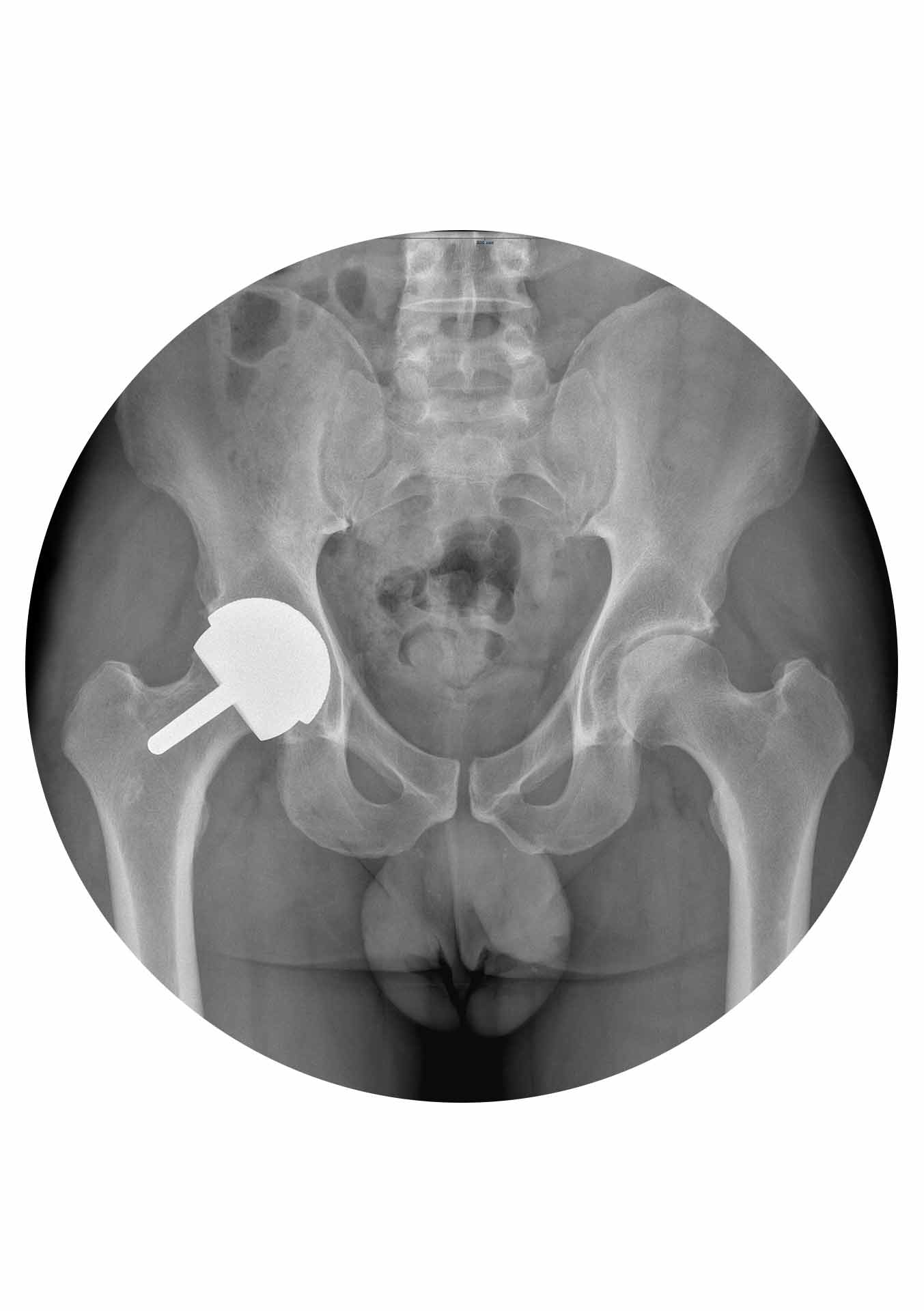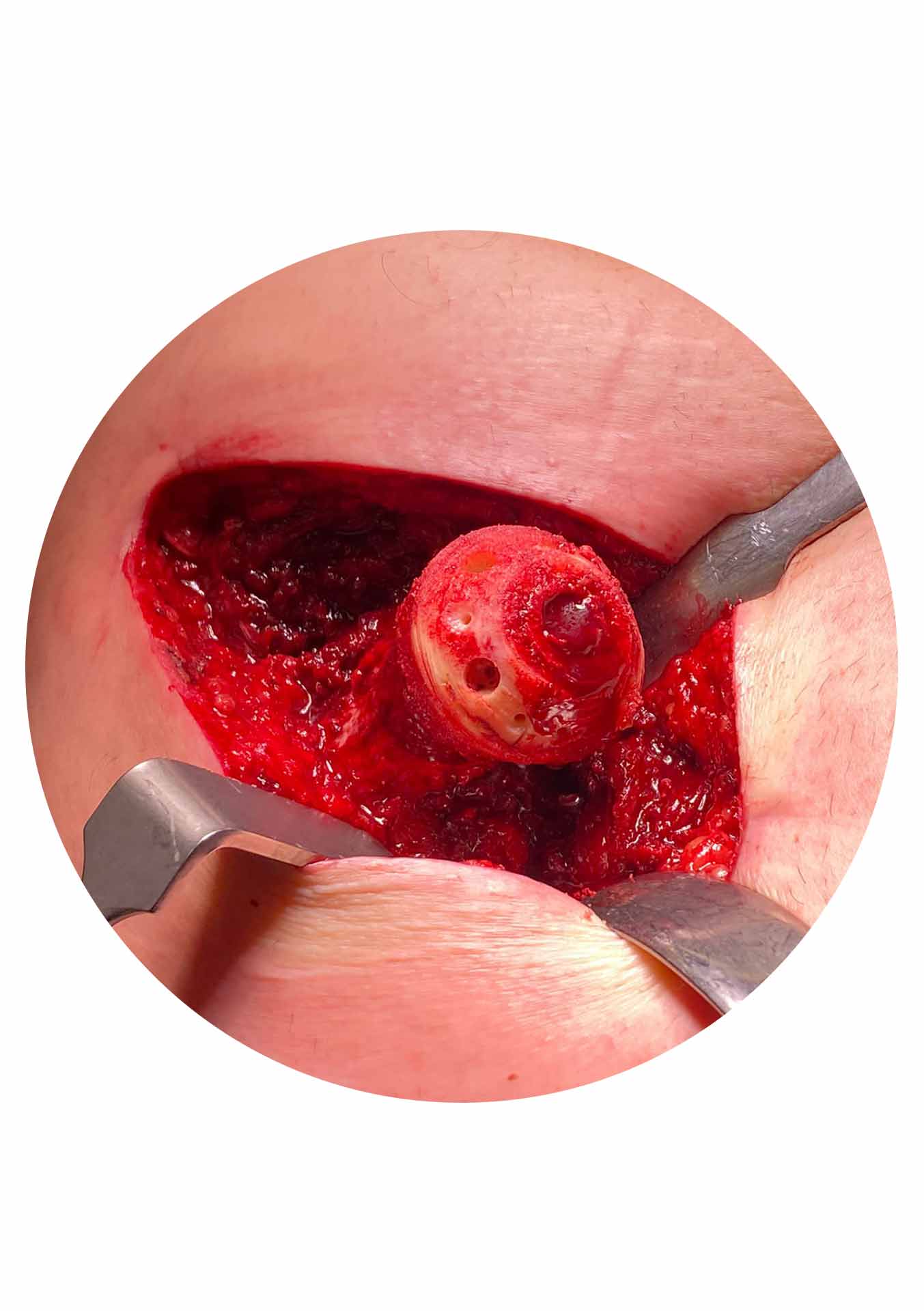

This is a surgical option that should be considered in young and active patients with hip arthrosis. In this group of patients, total hip replacement presents a higher percentage of failure (wear and peeling) and the need for early revision surgery. It consists of a conservative joint replacement as it preserves the entire structure of the joint structure unlike total hip replacement. In resurfacing arthroplasty, only the joint surface (only a few millimeters are removed) of the femoral head and acetabulum is replaced. There is no cutting of bone and this allows the size of the femoral head to be maintained, giving greater stability and mobility to the joint. Another advantage of bone preservation concerns the need for an eventual revision surgery in the future. Once, it is possible to “transform” a resurfacing into a total hip prosthesis if necessary. There are several examples of athletes, from professionals to amateurs, who opt for this solution because it allows them to maintain their physical activity and sports performance.
The Birmingham Hip Resurfacing (BHR) developed by the British surgeon Sir Derek McMinn has more than 20 years of use with proof given in various publications and national and international registers. Technically, the surgery is performed through a lateral approach (Hardinge – cut in the lateral face of the hip of about 12 to 15cm) and it is necessary to dislocate (surgically dislocate) the articulation in order to “scrape” the sick cartilage of the head of the femur and the acetabular cavity and then place an acetabular cup and a femoral head, both made of metal, to replace them. The BHR is therefore a metal-on-metal (MoM) joint, this metal being cobalt chromium, which has a history of use in orthopaedics of more than 40 years. The BHR is the most successful MoM hip resurfacing worldwide and represents an excellent solution for a specific group of patients with hip arthrosis with surgical indication.